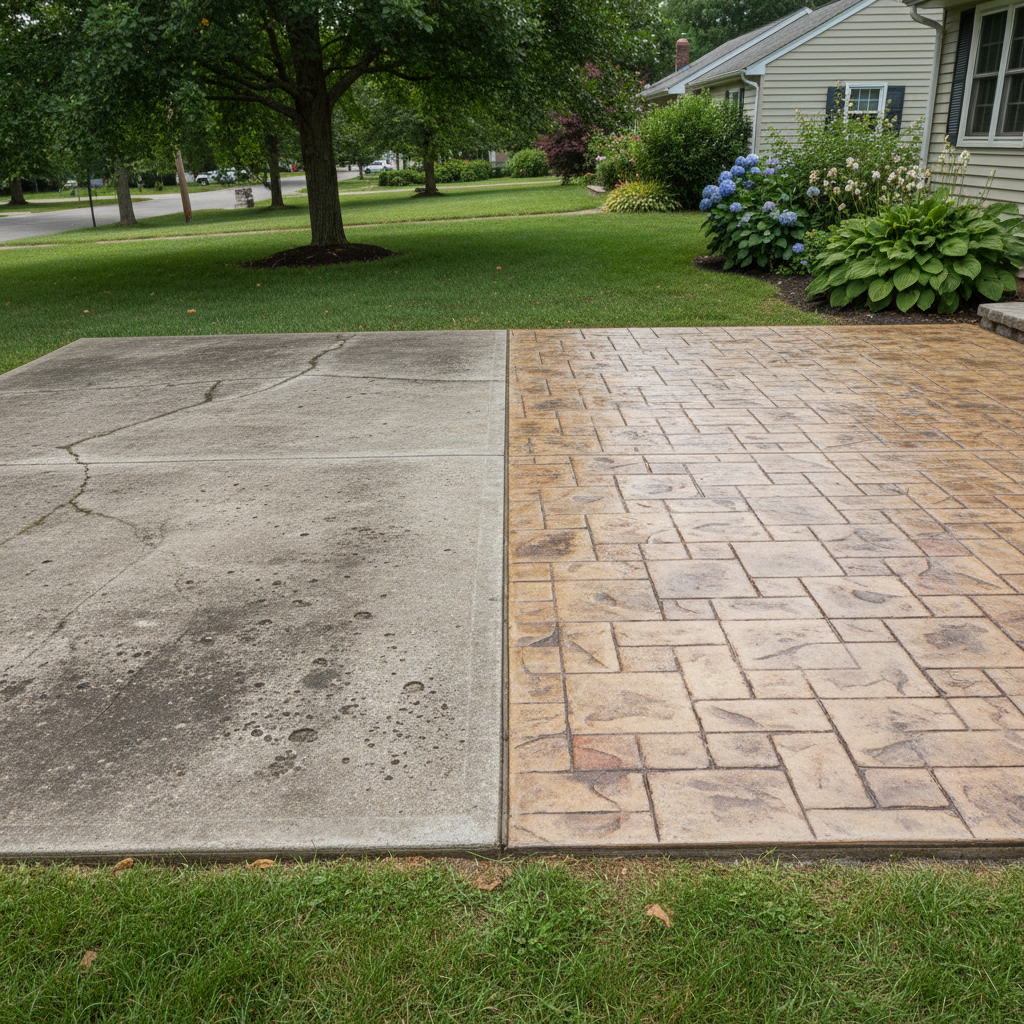
Alright, let's talk decorative concrete. You're probably looking to spruce up your patio, walkway, or even your basement floor here in Marlborough, and you've likely heard about stamped and stained concrete. Both can look fantastic, no doubt, but they're definitely not the same thing. And what works best for one neighbor might not be quite right for you. I see a lot of folks get confused, so let's try to clear things up a bit.
What's the Big Idea? Stamped Concrete
Stamped concrete is all about texture and pattern. Think of it like a giant cookie cutter for your concrete, really. While the concrete is still wet and pliable, we press large, flexible mats right into it. These mats have patterns molded into them – things that look like natural stone, brick, wood planks, even cobblestone. We also add color to the concrete itself, or apply color hardeners and release agents, to give it that realistic, multi-tonal look of the material it's trying to mimic.
It's a pretty involved process, I'll tell you. You're not just pouring concrete; you're shaping it, coloring it, and then sealing it to protect all that hard work. When it's done right, it's truly impressive. I've done stamped patios around Fort Meadow that look so much like natural flagstone, you'd have to get down on your hands and knees to tell the difference. What a transformation!
And What About Stained Concrete?
Stained concrete is a different beast entirely. Here, we're not adding texture; we're adding color and depth to the existing concrete surface. This can be done on new concrete, sure, but it's also a fantastic option for older, plain concrete surfaces that are in good shape but just need a facelift. There are two main types of stains: acid-based and water-based.
- Acid-based stains react chemically with the lime in the concrete. This creates translucent, variegated colors that look a lot like natural stone or aged leather. You get earthy tones – browns, greens, blues – and no two applications are exactly alike. It really has a very organic, mottled appearance.
- Water-based stains don't react chemically; they just penetrate the surface to deposit color. These offer a much wider range of colors, including vibrant hues, and the color tends to be more uniform. They're also a bit more forgiving to apply, which is nice.
The key thing here is that the stain doesn't hide imperfections in the concrete; it actually highlights them. Cracks, patches, or even variations in the concrete mix can show right through. Some people love that 'distressed' look, and others... well, not so much.
Cost: Where Your Wallet Comes In
Let's be blunt: stamped concrete is generally going to cost you more upfront than stained concrete. Why? Because it's a much more labor-intensive process. You've got the specialized tools, the extra steps for coloring and texturing, and it takes a skilled crew to get it looking right. Think about the time it takes to meticulously press those patterns and then hand-finish areas. It adds up, believe me.
Stained concrete, especially on an existing slab, can be a more budget-friendly way to get a high-end look. You're primarily paying for the surface prep, the staining materials, and the sealing. If you've got a perfectly good concrete slab that just needs a facelift, staining is often the smarter financial move.
Durability & Maintenance: The Long Haul
Both options are durable, but they have different considerations. Stamped concrete, being a thicker, textured surface, holds up incredibly well to foot traffic and our crazy New England weather. We get those freeze-thaw cycles around here that can really mess with surfaces, but a properly installed and sealed stamped concrete job from Top Line Concrete Marlborough will stand strong. The main maintenance is regular cleaning and resealing every few years to protect the color and surface from wear and tear, and to keep it looking fresh. If the sealer wears off, the color can fade over time from UV exposure.
Stained concrete is also very durable, as the color penetrates the surface rather than just sitting on top. However, because it doesn't have the added texture, any surface damage (like a deep scratch or chip) will be more noticeable. Like stamped concrete, it absolutely needs to be sealed to protect the color and prevent wear. Resealing is crucial, especially for outdoor applications where it's exposed to the elements. If the sealer fails, the color can wear off, particularly in high-traffic areas.
Appearance: What Look Are You Going For?
This is where personal preference really kicks in.
- Stamped Concrete: If you want to mimic natural stone, brick, or wood, stamped concrete is your best bet. It offers incredible realism and a huge variety of patterns and color combinations. You can get that rustic cobblestone look for a driveway or a sophisticated slate patio without the cost or upkeep of the real thing. It adds a lot of visual interest and architectural detail, don't you think?
- Stained Concrete: Stained concrete gives you a more subtle, artistic, and often contemporary look. You're not trying to fool anyone into thinking it's something else; you're enhancing the concrete itself. The translucent nature of acid stains creates beautiful, earthy variations, while water-based stains offer a wider, more uniform color palette. It's great for sleek, modern spaces or for adding a touch of color to a basement floor without overwhelming the room.
My Recommendation for Marlborough Homeowners
Look, I'm not going to tell you one is definitively 'better' than the other for everyone. It really comes down to your budget, the look you're after, and the existing conditions. But based on what I see around Marlborough, especially with our older homes and the desire for curb appeal:
If you're building a new patio, walkway, or pool deck, and you want that high-end, natural material look without the natural material price tag and maintenance, stamped concrete is usually the winner. It adds significant value and aesthetic appeal, and it handles our New England weather like a champ when installed properly.
If you've got an existing concrete slab that's in good structural condition but just looks drab, or if you're looking to add some unique color to an interior space like a garage or basement, stained concrete is a fantastic, cost-effective solution. It can totally transform a plain gray slab into something beautiful and unique.
Ultimately, the best thing to do is give us a call. We can come out, look at your space, talk through your ideas, and give you an honest assessment of what makes the most sense for your project and your budget. We've done plenty of both here at Top Line Concrete Marlborough, and we're happy to help you figure out the right path.