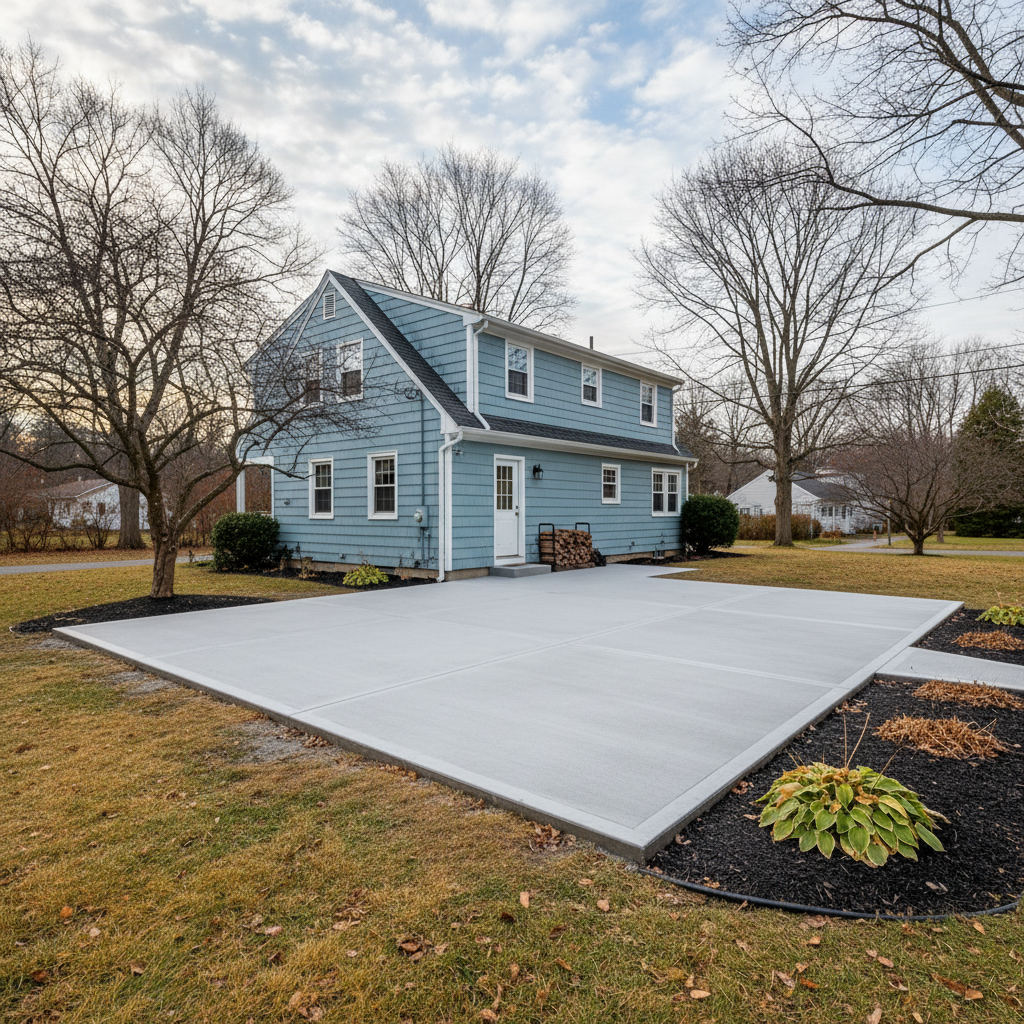
You're wondering about concrete work, right? Specifically, when's the best time to pour, what kind of weather messes things up, and how you keep that investment looking good once it's in. It's a fair question, especially with the kind of weather we get here in Marlborough.
Timing Your Concrete Project: It's All About the Temp
Honestly, timing is everything with concrete. You can't just pour it whenever you feel like it and expect it to last. Concrete cures best when temperatures are consistently between 50 and 80 degrees Fahrenheit. Here in Marlborough, that usually means late spring, summer, and early fall are your sweet spots.
Why that range? If it's too hot, the water in the mix evaporates too fast. That leads to cracking, a weaker slab, and a whole lot of headaches down the road. If it's too cold, the concrete takes forever to cure, and if it freezes before it's strong enough, you're looking at major damage. I've seen plenty of driveways in the older sections of town, like near the Wayside Inn Historic District, that show the signs of being poured in less-than-ideal conditions. They just don't hold up.
So, what does this mean for scheduling? I tell folks to aim for May through October. That gives us the best chance for consistent temperatures. We can certainly work outside that window, but it requires more precautions, like special admixtures or blankets, which can add to the cost and complexity. It's usually better to just wait for the right conditions if you can.
Weather's Impact: Beyond Just Temperature
Temperature is a big one, but it's not the only weather factor we're constantly watching. Here's what else matters:
- Rain: A little drizzle during the pour can be managed, but a downpour? That's a no-go. Too much water dilutes the mix, weakens the concrete, and can wash away the surface. We'll always reschedule if heavy rain is in the forecast.
- Wind: High winds can dry out the surface of the concrete too quickly, even if the air temperature isn't that high. This rapid drying can cause surface cracking, sometimes called 'plastic shrinkage cracking.' We've got ways to mitigate it, but calm days are always preferred.
- Humidity: Believe it or not, humidity plays a role. Low humidity, especially with wind, can accelerate that surface drying I just mentioned. High humidity can slow down the curing process, which isn't always a bad thing, but it's something we account for.
When you call Top Line Concrete Marlborough, we're not just looking at the day's forecast; we're looking at the forecast for the next few days to make sure conditions are right for proper curing. It's all about setting your concrete up for success from day one.
Protecting Your Concrete Investment Year-Round
Once your new patio or driveway is in, you want it to last, right? Here's how you can protect it through our New England seasons:
- Sealing: This is probably the most important thing you can do. A good quality penetrating sealer should be applied within the first year after the concrete is poured, and then reapplied every 2-5 years, depending on the product and how much abuse it takes. Sealer helps repel water, oil, and other stains, and it's a huge defense against the freeze-thaw cycles we experience here.
- De-icing Salts: Be careful with these. Most de-icing salts, especially those containing ammonium nitrates or sulfates, can severely damage concrete. They cause spalling (flaking) and deterioration. If you need to de-ice, use sand for traction or products specifically labeled as concrete-safe, usually those with calcium chloride or magnesium chloride in moderation. Shoveling promptly after snowfalls is your best bet.
- Heavy Loads & Impact: Concrete is strong, but it's not indestructible. Avoid driving heavy equipment or vehicles over new concrete for at least 28 days while it's gaining full strength. Even older concrete can be damaged by sudden, heavy impacts or by consistently parking extremely heavy loads in the same spot, especially if there are underlying issues.
- Cleaning: Regular cleaning helps prevent buildup of dirt, grime, and mildew. A simple power wash once a year can do wonders. Just don't use too high a pressure, as it can etch the surface.
Taking these steps seriously will dramatically extend the life and beauty of your concrete. It's not just about getting it poured right; it's about maintaining it properly. If you've got questions about your specific concrete project or what maintenance it needs, don't hesitate to reach out. We're always here to help our Marlborough neighbors.